
Available for borrowing.
( 1 / 1 unit )
Loan Duration (day): 7
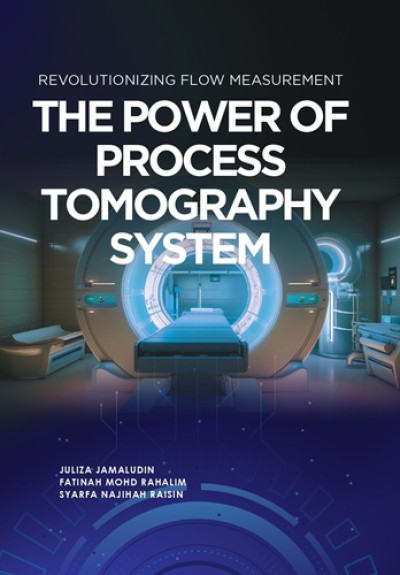
Revolutionizing Flow Measurement: The Power of Process Tomography Systems
by Juliza Jamaludin, Fatinah Mohd Rahalim & Syarfa Najihan Raisin
Publisher - Penerbit USIM
Category - Science
This e-book discusses the optical properties of milk with a focus on light propagation and random lasing phenomena. Light propagation in milk is examined through measurements of absorbance, transmission, and fluorescence spectra. Near-infrared (NIR), visible (VIS) and fourier-transform infrared (FTIR) techniques are applied to compare light behavior in milk. Three different spectrometry methods are used to analyze milk fat content based on absorbance and transmission data. The e-book further reveals that newly opened milk bottles exhibit higher light absorbance and lower light transmission compared to fermented milk. Variations in the optical properties of milk from animal, plant, and human sources are distinguished based on their light propagation characteristics and random lasing behavior. Absorbance and fluorescence spectra of various milk samples are measured across a wavelength range of 350 nm to 1650 nm, showing distinct responses associated with their fat content. Statistical analysis using principal component analysis (PCA) is employed to evaluate the reliability and validity of the absorbance and fluorescence data. Overall, the e-book emphasizes the importance of assessing milk’s optical properties for comprehensive analysis.
Please login to borrow the book.